 Anmelden
Linux Mint 22 "Wilma" aktualisiert Unterbau

Die Linux-Distribution Mint aktualisiert ihr Basissystem auf Ubuntu 24.04, sperrt ungeprüfte Flatpak-Pakete und speckt über die Sprachpakete etwas ab.

Die Linux-Distribution Mint aktualisiert ihr Basissystem auf Ubuntu 24.04, sperrt ungeprüfte Flatpak-Pakete und speckt über die Sprachpakete etwas ab.
Was ist der Unterschied zwischen Apps und Anwendungen? Gibt es den überhaupt?



Rust kommt in Linux an – nicht nur im Kernel, auch viele neue Shell-Werkzeuge wollen den Admin-Alltag umkrempeln. Nur ein Hype oder sind sie echt die Zukunft?
Linqa is a bilingual collaboration platform whose code is Free Software and developed using public money. It helps the daily work of the Franco-German Forum for the Future, a public institution that fosters collaboration among actors in France and Germany. We dive into the roots of Linqa with the people behind it.

To learn how Linqa started and how it works we talked with the CEO of the organization that commissioned this platform, Lale Eckardt, the co-founder of the company that developed it, Juergen Neumann, and Linqa Project Lead, Robin Denz.
FSFE: First of all, can you explain what is Linqa?
Juergen Neumann (DMX co-founder*): Linqa is a simple web-based whiteboard application with automatic translation between two languages. Editors can create and upload bilingual content, e.g. notes or PDFs, and arrange it within workspaces. Each workspace has dedicated members, who can discuss and comment on these contents in their native language in a chat panel. All content is visible in both languages and can be re-edited to manually improve the automatic translation.
*DMX develops dmx – the context machine, a Free Software semantic data platform. DMX developed Linqa for the Franco-German Forum for the Future.
FSFE: What brought you to develop a platform like Linqa?
Robin Denz (Linqa Project Lead): The development of Linqa was spurred by the necessity to enhance collaboration steered by the Franco-German Forum for the Future. With the aim of strengthening bilateral relations and promoting sustainable transformation, we facilitate dialogues among local initiatives, public administrators, civil society, and academia. In co-creative processes with a wide array of experts, we elaborate actionable policy recommendations for both governments. For this, we needed a platform that could transcend language barriers and streamline our complex work processes. Partnering with DMX to create Linqa allowed us to tailor a solution that meets our specific needs.
FSFE: Compared to fully proprietary solutions, which is the main benefit of this tool?
Juergen Neumann: Linqa provides an easy-to-use solution to communicate and collaborate across language barriers in bilingual teams. While many other platforms are cloud-based services that tend to make money out of the users’ data, Linqa is Free Software and can be self-hosted. The automatic translations in Linqa are currently done using DeepL’s EU-based translation service (which is proprietary, ndr).
FSFE: DeepL is proprietary. Do you have any plans to change this dependency? Which option do you see to address this?
Juergen Neumann: The fact that Linqa depends on DeepL was driven by the client's requirements for very accurate automatic translations in alignment with data protection requirements, as we found them in their public tendering back in 2021. Unfortunately, by that time we did not know of any comparable and suitable Free Software based option to replace their service. Luckily we can find promising candidates these days. We are in the process of evaluating LibreTranslate as an alternative service.

FSFE: Why did you decide to develop a platform whose code is Free Software?
Juergen Neumann: Since the founders of DMX Systems have been Free Software advocates early on, we have chosen a Free Software license from the very beginning. When you start to develop code, you immediately understand that writing software is all about sharing knowledge. That’s why we think that the resulting code should be licensed as Free Software as well. In addition to that, we think that Free Software, Open Standards and open interfaces are the only way to effectively avoid a vendor lock-in. They can be seen as catalysts to encourage people to join efforts. We think this is especially relevant for public administrations spending public money. That’s why we always try to convince our clients to stay the course and join the Free Software environment with their requirements and investments.
The transparency of the code and algorithms allows to investigate how the software was made and how it works. The code is no black box: improvements by others are not only possible, but explicitly welcome.
FSFE: What is the main benefit of LInqa being developed as Free Software for the Franco-German Forum for the Future?
Robin Denz: The main benefit of developing Linqa as Free Software lies in its potential for widespread adoption and adaptation. The Franco-German Forum for the Future has a very specific use of the Linqa platform, which follows from our particular methodology and the people we work with. We get exactly what we need with Linqa but still its potential goes beyond our specific use case. So, I am excited and curious to see how other organisations can make use of its different functions in other fields than the one of Franco-German sustainable governance. For instance, in the humanitarian sector. By making the platform Free Software, we empower other non-profit actors and organizations to leverage its capabilities for their specific domains and requirements. This not only enhances its utility beyond our immediate use case but also encourages a community of users to contribute improvements and innovations, enriching the platform for all users.
FSFE: Which role do you think Free Software has in developing this kind of projects, commissioned with public money?
Robin Denz: Free Software plays a crucial role in projects like Linqa by fostering transparency, accessibility, and community-driven innovation. Knowing that a software like Linqa can benefit a wide array of other non-profit actors can act as a strong legitimization for putting public money in this kind of projects. For us, it meant to be able to customize and extend the platform according to our evolving needs without being constrained by proprietary limitations. Moreover, the ethos of Free Software aligns with our mission of promoting collaboration and knowledge sharing across borders, ensuring that our tools remain inclusive and adaptable to diverse contexts.
FSFE: What challenges did you have to face when developing Linqa?
Juergen Neumann: The first challenge is about licensing: Since there are very many different software licenses, it can be difficult to find out if you can actually publish your code - including the external libraries – under the terms and conditions of your desired license.
The second challenge is about money: Still too few individuals and organizations understand the challenges of the Free Software ecosystem. To develop and maintain good code, you need skilled people who all need to make a living. If individuals and especially organizations were willing to spend more money on Free Software instead of proprietary software, it would be beneficial to all.
Also, for us as a company, finding investors often feels much harder, because our business model does not include intellectual property but is free and open to all.
FSFE: What would you say to other companies that are not aware of the benefits of Free Software?
Robin Denz: I would emphasize that choosing Free Software for your project not only aligns with principles of openness and collaboration but also offers practical advantages. It can foster innovation through collective intelligence and enable rapid customization to meet specific needs. Moreover, Free Software encourages ethical considerations such as data privacy and security, which are increasingly critical in today's digital landscape. All in all, Free Software helps empowering organizations to build robust, community-supported solutions that can benefit society as a whole.

FSFE: Some years ago, the FSFE launched the “Public Money? Public Code!” initiative. With it we ask that software paid by taxpayers’ money should be released as Free Software. What is the role of Free Software in an organisation like the Franco-German Forum for the Future?
Lale Eckardt (Franco-German Forum for the Future CEO): The Franco-German Forum for the Future is rooted in the Treaty of Aachen signed by the two governments in 2019. We are thankful that the Federal Ministry of Education and Research (Bundesministerium für Bildung und Forschung, BMBF), which finances our work on the German side, was supportive of an experimental approach. During the COVID-19 pandemic, we decided against jumping to conclusions and developing a run-of-the-mill platform just to tick off digital engagement. Instead, we took our time trying to understand where in our specific work and dialogue process a digital tool can offer significant value and how. With Linqa we have a tailored tool whose strength lies in its specificity and simplicity. And I think that is why Linqa is gathering interest from other organisations as well.
FSFE: How was the procurement process regarding Linqa? Was there a public tender or direct contact with DMX? Was it easy to procure Free Software? Do you think is there a way to make it simpler to help the procurement of Free Software tools in public administration?
Lale Eckardt: Of course, we put the development of our platform out to public tender, with DMX submitting the most competitive offer. Free Software development was not specified in the tender but emerged as an idea through our cooperation with DMX. The main challenge for procurement processes of this complexity is finding a middle ground between specificity and openness. On the one hand, as the contracting authority, we need to be as specific as possible about our needs. This ensures fair competition and reliable offers. On the other hand, we wanted to remain open to learning from and with the service provider, as well as critically assessing our hypotheses during the development process. To balance these two aspects, we aimed to clearly define the functionalities we envisioned for the platform without fixing too many technical details.
FSFE: What would you say to other public administrations that want to develop software? Would you recommend them to follow the Public Money? Public Code! principle?
Lale Eckardt: If the money spent on developing software from within public administration or in publicly funded project like ours can not only make public administration more efficient but also, through its availability as Free Software, strengthen our digital infrastructure in the public interest, than that is good news for our democracies!
The “Public Money? Public Code! (PMPC)” initiative aims to establish Free Software as the standard for publicly funded software. Promoted by the Free Software Foundation Europe, PMPC is supported by over 200 organizations and administrations, and more than 35.000 individuals. You can also support the campaign signing the Open Letter and with a donation to support this work.
Der 9. Teil einer Einführung in die Python3-Bibliothek Tkinter und der lange Weg zum perfekten GUI.

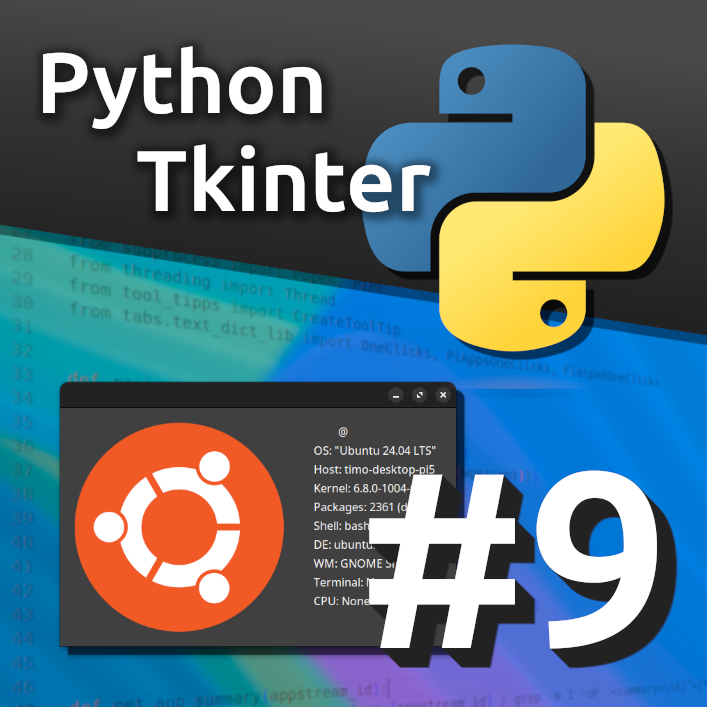
Das gerade offiziell freigegebene Linux Mint 22 basiert auf Ubuntu 24.04 LTS und liefert als Standard-Desktop das hauseigene Cinnamon in Version 6.2 aus. Weiterhin sind Images mit Xfce oder Mate im Angebot.

Der Deutsche Handballbund (DHB) relauncht DHB.de mit adesso und dem Open-Source CMS Drupal, um Fans und Mitglieder stärker an den Handballsport zu binden. Die neue Website und eine umfassende Plattformstrategie sollen bis Ende 2024 die Benutzerfreundlichkeit verbessern und alle Online-Portale des DHB vereinheitlichen. Ziel ist eine stärkere Marke und effizientere Kommunikation.
Mit einer automatisierten Foto-Verarbeitung kann man sich viel Arbeit sparen. Dieser Artikel zeigt eine DIY-Möglichkeit auf.


Wayland 1.23.0-1 verhindert den Start einer Wayland-Sitzung mit Plasma 5. Die Version wird derzeit in Debian Unstable und siduction verteilt. Auch Ubuntu könnte bald betroffen sein.

Folge 096 des CIW Podcasts.
Welche Herrschaftsformen gibt es in der FOSS-Welt?


Die Open Enterprise Linux Association (OpenELA) hat die Bereitstellung der Sourcen von RHEL-Veröffentlichungen automatisiert, sodass diese kurz nach Veröffentlichung durch Red Hat bereitstehen.

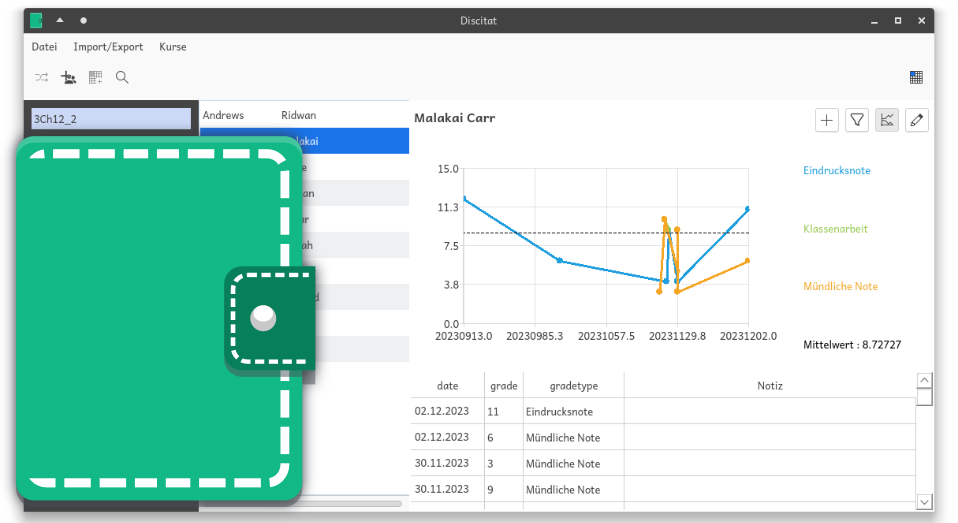
Die meisten Lehrkräfte dürften eine Tabellenkalkulation benutzen. Das funktioniert für mich aber nicht gut bzw. überhaupt nicht, sodass ich eine andere Lösung (er)finde.

Künstliche Intelligenz wird häufig als latente Gefahr für die Datensouveränität von Unternehmen beschrieben. Wer sich dieser Gefahr nicht aussetzen will, muss Strategien und Taktiken für den sicheren und zugleich produktiven Umgang mit KI entwickeln. VNC erklärt die wichtigsten Parameter von Confidential AI.
Zur Replikation und Kapselung von Laufzeitumgebungen ist Apptainer die Lösung innerhalb der Computerwissenschaft.

IT-Sicherheitsexperte Elmar Geese analysiert die gravierenden Folgen eines fehlerhaften CrowdStrike-Updates, das weltweit Schäden verursachte. Der Vorfall zeigt die Risiken zentralisierter digitaler Lieferketten und die Problematik von Sicherheitssoftware in kritischen Bereichen. Geese fordert bessere Haftung, Qualität und den Einsatz von Open-Source-Alternativen zur Vermeidung solcher Vorfälle.
Die Ursache für ein technisches Problem ist oft überraschend. Manchmal liegt sie an der Qualität der Ausrüstung.


Fedora 41 soll den Wechsel von LXQt 1.x zu v2.0 vollziehen. Ein entsprechender Vorschlag würde kürzlich eingebracht. Damit würde für Fedora eine weitere Abhängigkeit zu Qt 5 entfallen.

Bei Fedora Workstation führte der NVIDIA-Treiber zuletzt bei aktiviertem Secure Boot zu nicht mehr startenden Systemen. Fedora 41 soll das ändern.

In diesem Überblick beschreibe ich am Beispiel der Proxmox inventory source, wie eine eigene Inventory Source im Ansible Automation Controller hinzugefügt werden kann.
Die folgenden Schritte wurden mit der Ansible Automation Platform 2.4 getestet. Die einzelnen Schritte sollten in gleicher Weise auch in Ansible AWX ausgeführt werden können.
Um diesem Text folgen zu können, werden Kenntnisse im Umgang mit Ansible und Git auf der Kommandozeile vorausgesetzt.
Der Text verweist, wo möglich, auf bestehende Dokumentation. Es handelt sich bei diesem Text nicht um ein klassisches Tutorial. Er dient mir als Gedächtnisstütze und mag euch eine Anregung sein, bzw. im besten Fall die Wissenslücken schließen, die sich mit der Dokumentation allein nicht schließen lassen.
Abschnitt 18.4.5.1. Inventory sources im Automation Controller User Guide führt die in der Ansible Automation Platform (AAP) unterstützten Inventory Sources auf. Möchte man nun bspw. Proxmox Virtual Environment (PVE), Microsoft Active Directory oder Cisco DNA Center als Quelle für sein Inventar benutzen, wird man auf den ersten Blick nicht fündig.
Für das Beispiel in diesem Text werden Hosts aus der Bestandsliste eines PVE als Inventory Source hinzugefügt. Die dabei verwendete Vorgehensweise kann auch für andere Inventory Plugins verwendet werden. Die Entwicklung von Inventory Plugins ist jedoch nicht Gegenstand dieses Textes. Hierzu wird auf die Dokumentation unter „Developing dynamic inventory“ verwiesen.
Mein Kollege Steffen Scheib hat mir geholfen, das Proxmox-Plugin zu konfigurieren, wofür ich ihm an dieser Stelle nochmal ganz herzlich danke. Es liegt auf meiner Arbeitsstation als Ansible Project in folgender Verzeichnisstruktur vor:
]$ tree proxmox_inventory/
proxmox_inventory/
├── collections
│   └── requirements.yml
├── inventory
│   └── inventory.proxmox.yml
└── vault_password_file

3 directories, 3 files
Mit Ausnahme der Datei vault_password_file wurden alle Dateien und Verzeichnisse in Git aufgenommen. Ich verwende einen einfachen Git-Server in meiner Laborumgebung, auf welchen ich meine lokalen Repositorys pushe. Der Automation Controller synchronisiert das Projekt aus dem Git-Repo, um es als Inventory Source verfügbar zu machen.
Das Proxmox Inventory Plugin befindet sich in einem Git-Repository, auf welches mit SSH-Key-Authentifizierung zugegriffen werden kann. Damit auch der Automation Controller auf dieses Repository zugreifen kann, wird ein Credential vom Typ Source Control erstellt.

Der SSH-Private-Key wurde von meinem Host hochgeladen und verschlüsselt im Automation Controller gespeichert. Der Key lässt sich in der GUI nicht wieder sichtbar machen, lediglich ersetzen.
Der Dokumentation folgend, wird ein Projekt hinzugefügt:

Wenn alles passt, wird das Projekt nach dem Speichern erfolgreich synchronisiert:

Dieses Projekt wird in einem späteren Schritt zur Erstellung des Inventory benötigt.
Bevor ich auf die Erstellung selbst eingehe, möchte ich kurz beschreiben, warum dieser Schritt notwendig ist.
Folgender Codeblock zeigt meine Datei inventory.proxmox.yml welche einige mit Ansible Vault verschlüsselte Werte enthält:
]$ cat inventory/inventory.proxmox.yml
---
plugin: 'community.general.proxmox'
url: 'https://pve.example.com'
user: !vault |
          $ANSIBLE_VAULT;1.1;AES256
          30623661316338386633623162303036346562346238386162633263636164636338393532613565
          3332616265353962326139363533313261623739643765640a623032613034613139653162356266
          34646464323233313964663939643631313539353736313364333433643136306632633065633664
          3234346635396563350a656334353632643830353534386636306365656261356436613662623163
          31663535363264356537336531393731633164613733316537383433653334643433
token_id: !vault |
          $ANSIBLE_VAULT;1.1;AES256
          62356662336534646661353666356263363734666231643932393430336639363032303266636432
          3762343235633335613663393838343532326230353130380a616161313830373265306137346562
          61613662333764393565316362623838633332376366373161646237363163663039613863393439
          3165616664626633390a396465343430373837343662373634653634643138613131633034306432
          62623438366166353765366339323263393833396133653866343833663335663766
token_secret: !vault |
          $ANSIBLE_VAULT;1.1;AES256
          66386338643463373837666164396332306261366634396630306430663937613963346164636433
          3362396566343932393234353439383932316436396437380a336365393038373566383534623136
          30353332383464356664393666383664636536666531663463623232353136353636363366653431
          3234616531623537630a393530643437376363653438643036636436316636616265316361623661
          35313832613063633662363531346164306638373538393164373663633335333863646430663232
          6339343164633865636239356538326438333937366134613738

validate_certs: false

# fail if a variable is not resolvable
strict: true

# facts are required to retrieve proxmox_vmtype
want_facts: true

# only allow qemu VMs
filters:
  - "proxmox_vmtype == 'qemu'"
Auf der Kommandozeile meines Hosts kann ich den Inhalt des Dynamic Inventory wie folgt anzeigen lassen:
ansible-inventory -i inventory/inventory.proxmox.yml --list --vault-password-file vault_password_fileDie Datei vault_password_file befindet sich jedoch nicht im Git, da sie das Passwort im Klartext enthält. Aus diesem Grund möchte ich die Datei auch nicht auf dem Automation Controller ablegen. Irgendwie müssen auf dem Automation Controller jedoch Credentials hinterlegt werden, um die Ansible Vault encrypted_strings zu entschlüsseln. Die Lösung steckt in diesem Kommentar auf Github. Im Automation Controller User Guide gibt es dazu Chapter 11. Custom credential types.
Fertig sieht das dann so aus:

Das Schlüssel-Wert-Paar secret: true stellt sicher, dass das Passwort verschlüsselt gespeichert wird. Es kann danach im Automation Controller nicht mehr im Klartext angezeigt werden. Nachdem der neue Credential Typ erstellt ist, kann dieser instanziiert werden:

Das Vault Passwort wird in das entsprechende Formularfeld kopiert. Es ist standardmäßig nicht sichtbar und wird wie oben bereits erwähnt, verschlüsselt gespeichert. Mit diesem Credential verfügt der Automation Controller nun über die notwendigen Informationen, um das Proxmox Inventory auszulesen.
Zuerst wird ein Inventory nach Dokumentation erstellt. Anschließend wird diesem eine Inventory Source hinzugefügt.
Die Formularfelder sind dabei wie folgt zu befüllen:

Nach dem Speichern wird die Inventory Source durch Klick auf ‚Sync‘ synchronisiert:

Und wir haben 17 Hosts in unserem Inventory:

Damit endet dieser kurze Überblick auch schon. Ich wünsche euch viel Freude bei der Inventarpflege.

Nicht immer lässt sich zeitnah über jede Neuigkeit rund um das freie Betriebssystem berichten, manche Ereignisse sind es aber dennoch wert, Erwähnung zu finden. In dieser Zusammenfassung überblickt die Redaktion alle wichtigen Meldungen aus der Linux-Welt der vorangegangenen Woche.
 Auch Geräte mit Windows 365 haben für den weltweiten IT-Ausfall gesorgt. Vor einigen Wochen hat fehlerhafte Crowdstrike-Software Linux-Systeme unbrauchbar gemacht. (Updates & Patches, Computer)
Die Woche 29 im Rückblick: Nvidia, openSUSE und das Problem mit der zentralisierte Infrastruktur.


Mozilla hat mit dem neuesten Firefox Update automatisch ein fieses Tracking aktiviert, um Werbung zu schalten. Dabei wurden wir gar nicht gefragt. Ich zeige dir, wie du dich trotzdem schützen kannst.



 Github-Repositories enthalten nicht selten sensible Daten. Ein Repo zu löschen oder auf privat zu stellen, schützt aber nicht immer vor einem Fremdzugriff. (