
Lese-Ansicht

Mozilla veröffentlicht Firefox 125

Mozilla hat Firefox 125 für Windows, Apple macOS und Linux veröffentlicht. Dieser Artikel fasst die wichtigsten Neuerungen zusammen – wie immer auf diesem Blog weit ausführlicher als auf anderen Websites.

Download Mozilla Firefox für Microsoft Windows, Apple macOS und Linux

Weitere Verbesserungen von Firefox View

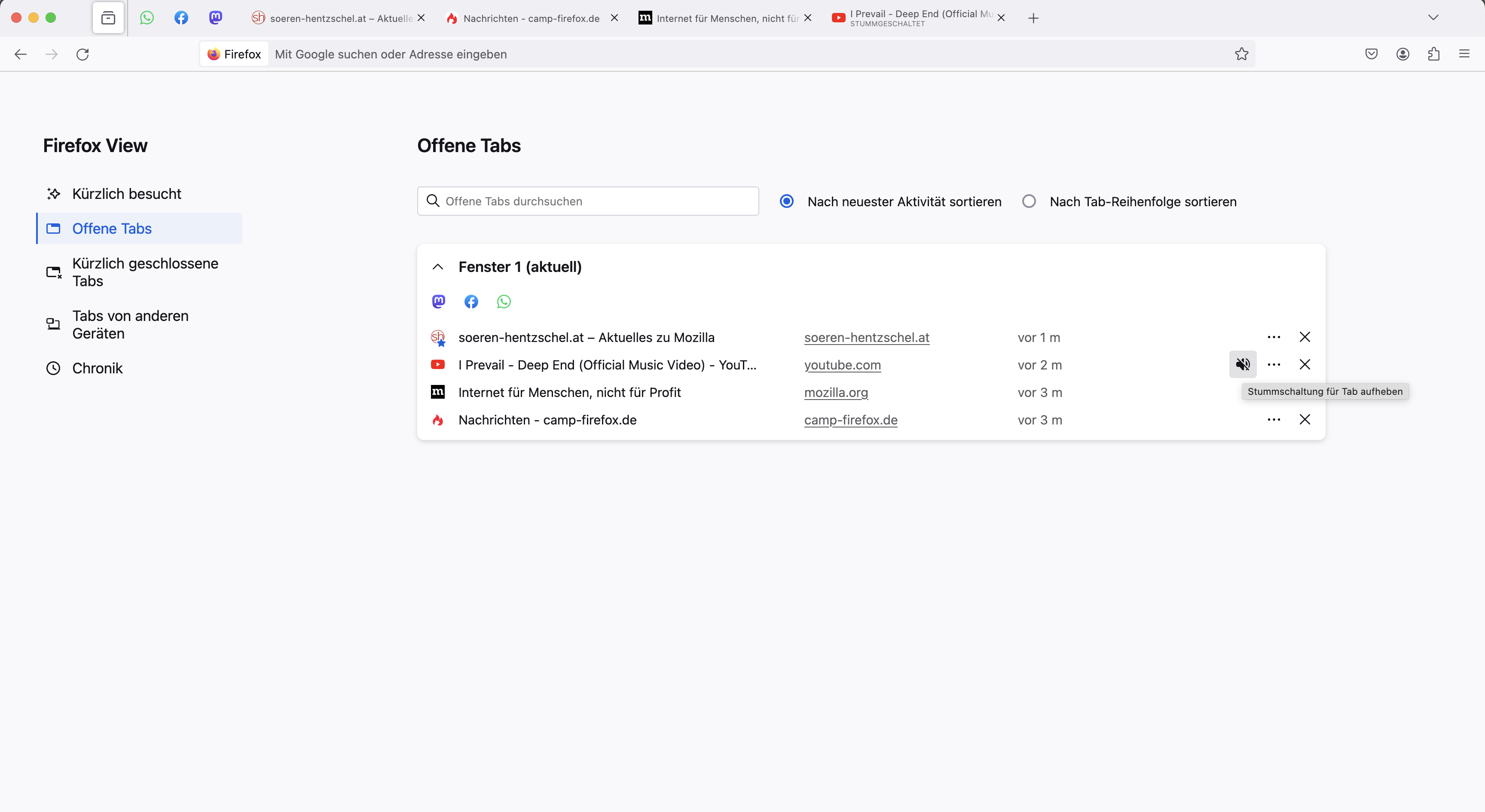
Die mit Firefox 106 eingeführte und mit Firefox 119 stark verbesserte Funktion Firefox View hatte mit Firefox 123 eine Suchfunktion sowie verbesserte Performance erhalten. Firefox 124 brachte die Möglichkeit, im Reiter der offenen Tabs diese wahlweise nach der neuesten Aktivität oder nach der Tab-Reihenfolge zu sortieren. Mit Firefox 125 folgen weitere Verbesserungen.

So werden ab sofort auch angeheftete Tabs im Reiter der offenen Tabs angezeigt. Darüber hinaus wurden diverse Indikatoren hinzugefügt. So lässt sich beispielsweise erkennen, ob ein Tab auch als Lesezeichen existiert oder ob in diesem gerade etwas wiedergegeben wird. Über das entsprechende Lautsprecher-Symbol lässt sich der Tab direkt stumm und wieder laut schalten. Auch ein Schließen-Button wurde an dieser Stelle ergänzt, um Tabs direkt aus Firefox View heraus mit einem Klick weniger schließen zu können.
Firefox 125

Einfacheres Navigieren zu URLs in Zwischenablage

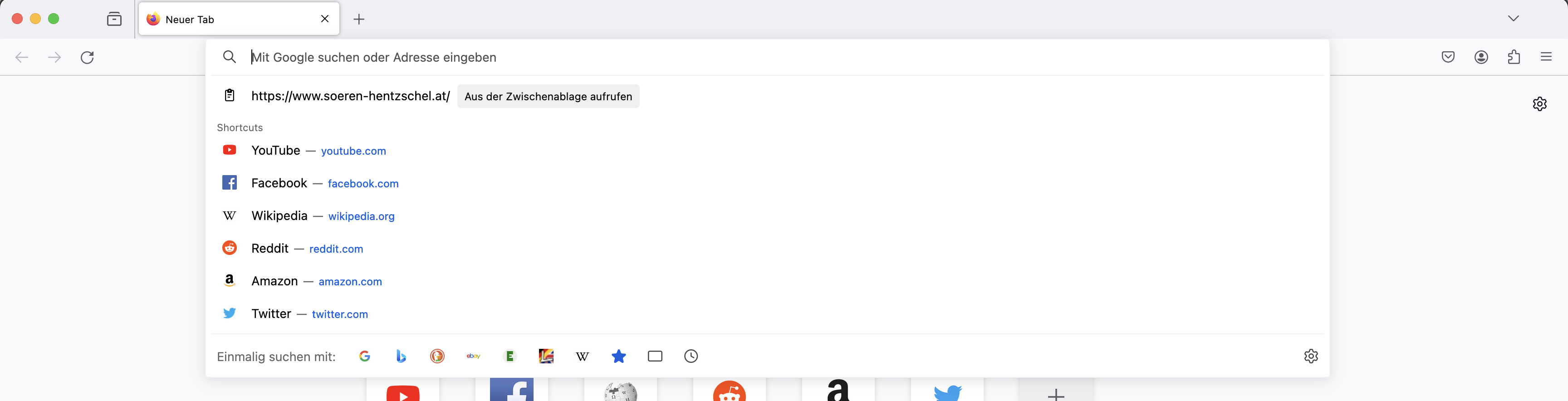
Befindet sich eine URL in der Zwischenablage und die Adressleiste wird fokussiert, schlägt Firefox diese jetzt direkt vor. Wird die Seite nicht aufgerufen, schlägt Firefox diese beim nächsten Fokussieren aber nicht erneut vor, sodass nicht die ganze Zeit eine URL vorgeschlagen wird, die nicht besucht werden soll.
Firefox 125

Textstellen in PDF-Dateien hervorheben

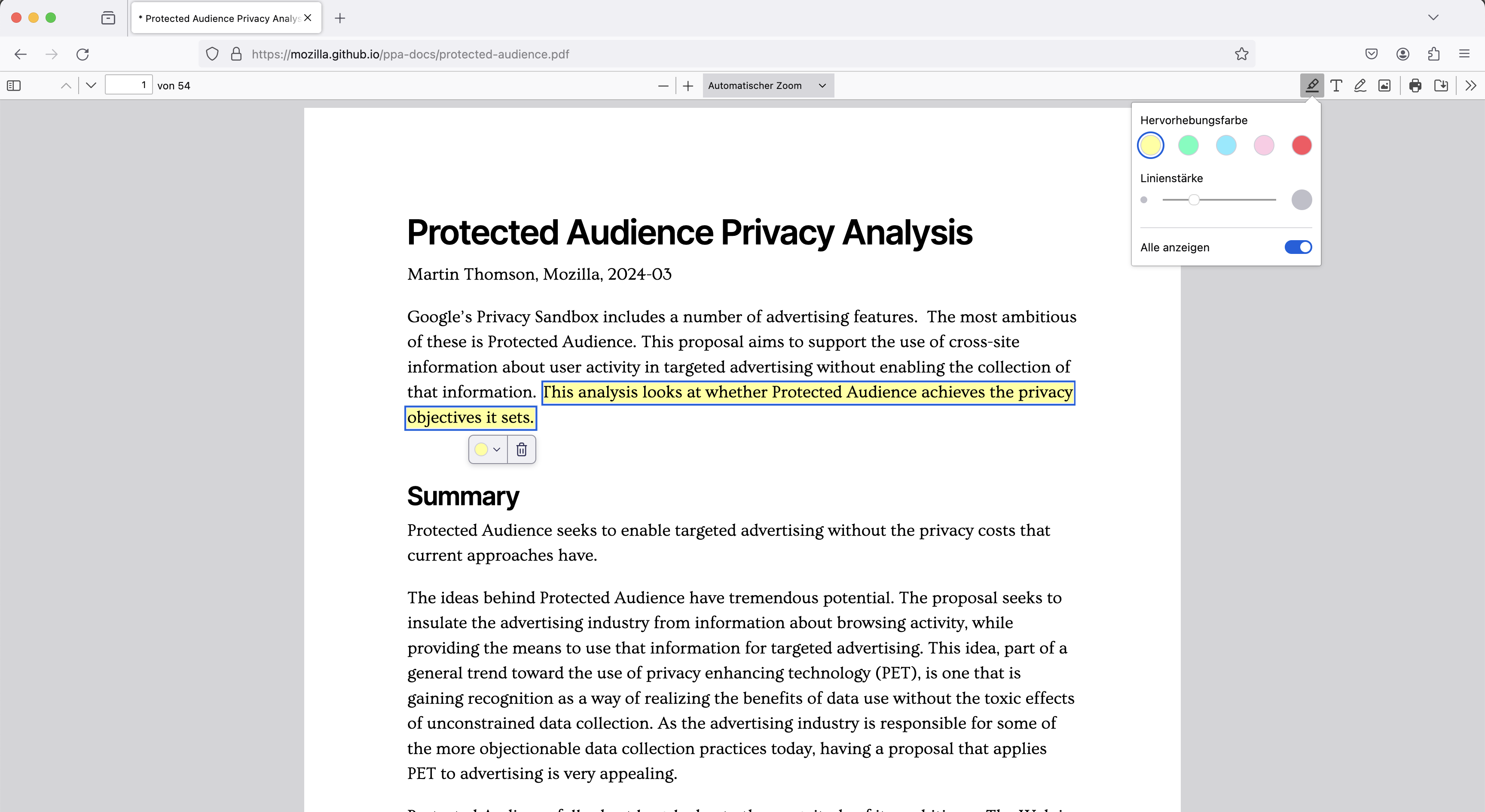
Der PDF-Betrachter von Firefox wurde um eine Funktion erweitert, um Textstellen in PDF-Dateien farbig hervorheben zu können.
Firefox 125

Diese Neuerung wird schrittweise im Laufe der kommenden Wochen für alle Nutzer ausgerollt werden.

Sonstige Endnutzer-Neuerungen von Firefox 125

Die Einstellungen können wie bisher auch via about:preferences geöffnet werden, zusätzlich aber auch via about:settings, wie man es aus Chromium-basierten Browsern kennt.

Die lokale Übersetzungsfunktion funktioniert nun besser bei Textstellen mit unsichtbaren HTML-Elementen innerhalb von Sätzen.

Werden Tab-Umgebungen genutzt (beispielsweise über eine Erweiterung) lassen sich über die Adressleiste (Eingabe von „%”) jetzt auch Tabs in anderen Umgebungen durchsuchen.

Nutzern in den USA und Kanada bietet Firefox beim Absenden eines Adressformulars jetzt an, Adressen zu speichern, um diese dann zukünftig in Formularen vorzuschlagen.

Das Setzen von Firefox aus dem Microsoft Store als Standardbrowser für alle relevanten Dateitypen mit nur einem Klick wurde wieder aktiviert.

Mehr Sicherheit für Firefox-Nutzer

Auch in Firefox 125 wurden wieder mehrere Sicherheitslücken geschlossen. Alleine aus Gründen der Sicherheit ist ein Update auf Firefox 125 daher für alle Nutzer dringend empfohlen.

Firefox blockiert jetzt standardmäßig alle Downloads, die über http:// anstelle von https:// erfolgen. Bisher war dies nur bei http://-Downloads auf https://-Websites der Fall. Wie gehabt kann der Nutzer nach expliziter Bestätigung den Download auf Wunsch durchführen.

Außerdem gab es weitere Verbesserungen des Schutzes vor IDN-Spoofing, bei dem bestimmte Zeichen in der Adressleiste vortäuschen, man würde sich auf einer vertrauenswürdigen Domain befinden.

Verbesserungen der Webplattform

Firefox unterstützt AV1 jetzt auch für Encrypted Media Extensions (EME), womit Anbieter von Streaming-Plattformen Gebrauch von diesem modernen Video-Codec machen können.

Die spannendste Ergänzung der Webplattform auf HTML-Ebene ist die Unterstützung des popover-Attributs.

In einer Gruppe von Radio-Buttons ohne aktive Auswahl erreicht die Tab-Taste jetzt genau wie bei einer Gruppe mit aktiver Auswahl nur noch die erste Option statt jede einzelne Option. Zwischen den einzelnen Optionen kann wie gehabt mit den Pfeiltasten navigiert werden.

In CSS funktioniert die Eigenschaft align-content jetzt auch für Block-Elemente und nicht länger nur in Flex- oder Grid-Elementen. Und transform-box unterstützt jetzt auch content-box und stroke-box als Werte.

JavaScript wurde um die Unterstützung für Intl.Segmenter sowie navigator.clipboard.readText() ergänzt.

WebAssembly-Module (Wasm-Module) können nun mehrere unabhängige Linearspeicher verwenden. Mehrere Speicher ermöglichen eine effizientere Interoperabilität zwischen Modulen und bessere Polyfills für kommende Wasm-Standards.

Weitere Neuerungen für Entwickler von Websites lassen sich in den MDN Web Docs nachlesen.

Firefox 125.0.1

Wegen eines Fehlers, der verursachte, dass Nutzer von Apple macOS ohne Administrator-Rechte Firefox nicht aktualisieren konnten, wurde Firefox 125.0 überspringen und durch Firefox 125.0.1 ersetzt, der diesen Fehler behoben hat.

Der Beitrag Mozilla veröffentlicht Firefox 125 erschien zuerst auf soeren-hentzschel.at.

  •  

TV-Medien-Helfer

Zwei nützliche Medienhelfer: TV-Browser als TV-Zeitschrift und MediathekVew für Online-Mediatheken verschiedener Sender

  •  

Are Free Software developers at risk?

Are Free Software developers at risk?

Free Software is everywhere, with studies estimating that it is present in about 96% of the applications that we use. But what are the responsibilities and liabilities of the Free Software developers? A potential threat to Free Software developers looms in the form of an ongoing lawsuit in the UK involving Bitcoin and its core developers.

Bitcoin (BTC) is a cryptocurrency created in 2009 that operates under the MIT Free Software licence. After its creator disappeared, a group of software developers continued to develop Bitcoin independently. Currently, Dr. Craig Wright, who claimed to be the creator of Bitcoin, is suing the Bitcoin developers in the UK courts through his company, Tulip Trading Limited (Tulip). This company claims to have lost £3 billion worth of bitcoin due to a hack that compromised the private keys, resulting in the loss of access to the funds. In this lawsuit Tulip is demanding that the Bitcoin developers provide access to the lost Bitcoin, arguing that the developers have a legal obligation to provide access or offer equitable compensation or damages.

As such, this legal case is currently drawing attention to the issue of Free Software developers' liability, in particular the extent to which they are responsible to their users.

UK High Court’s opinion: Developers have no legal duties or a duty of care in this case, but they do have certain duties in some specific situations.

The High Court considered whether software developers and controllers of digital asset networks bear legal obligations to cryptocurrency holders who rely on their software. The court ruled in favour of the developers, stating that as a "fluctuating body of individuals", the developers could not realistically maintain ongoing obligations. The court rejected the notion that developers should be compelled to provide software updates upon the request of digital asset owners, emphasising the absence of any explicit commitment or assurance by the developers. Regarding the alleged tortious duties, the Court determined that the developers did not owe Tulip a duty of care, highlighting that Tulip's loss was solely economic.

A duty of care is a legal responsibility imposed on an individual that requires them to follow a level of reasonable care when conducting any acts that could endanger others.

However, the court recognized that, in certain cases, software developers have specific duties. For instance, developers must exercise caution to avoid harming users' interests and may have an obligation to remedy bugs or faults in the system.

The court also acknowledged that the disclaimer in the MIT license, broadly disclaims liability for software issues. However, the court did not confirm whether this disclaimer absolved BTC Network developers of responsibility for its operation. This is because:

  • the MIT disclaimer has never been litigated, and the court is free to decide and set precedent.
  • such disclaimers are not easily found when using software.

UK Court of Appeal’s opinion: Arguable that developers owe some fiduciary legal duties

On appeal, the Court of Appeal (the second highest court in the UK) overturned the High Court's decision, concluding that it was at least arguable that the developers owe fiduciary legal duties to cryptocurrency owners. The court noted the exclusive control of the Bitcoin software code by a small group of developers and their decision-making role on behalf of all Bitcoin owners, resembling fiduciary responsibilities. The court also noted that only a handful of developers have exclusive access to the Bitcoin software code on GitHub. For example, if a Bitcoin owner notices a bug, he or she is unable to fix it because only the developers with access can do so, and they have to agree to do so. In the eyes of the court, this is a clear exercise of the de facto power of the developers. The court completely missed the point that no one can prevent others from applying a fix to the code - that is part of the fundamental freedom that comes with Free Software: if the developers of a particular repository refuse to apply needed fixes, the community can fork the project and bypass those developers.

Furthermore, code is speech. Freedom of expression includes expression in the language of computer code as well. Imposing disproportionate duties on Free Software developers forces them to change their code, and therefore infringes on their freedom of expression. The court also observed that the developers have a positive duty to fix bugs and code errors and a negative duty to refrain from acting in their own self-interest.

In summary, Tulip's case raises significant legal questions, and according to the latest developments, Tulip must prove ownership of the alleged stolen bitcoins in a preliminary trial.

Chilling effect on Free Software development?

Common law in the UK (and other countries) is developed through court decisions and precedents. When a court makes a decision in a case, it establishes a legal precedent that serves as a guide for future cases with similar circumstances. Lower courts generally have to follow the precedents set by the higher courts. Courts in common law countries tend to also borrow concepts and precedents from other countries if there is no local precedent available. The law and legal scholarship around Free Software developers’ duties is underdeveloped and almost non-existent. If Tulip succeeds in their case, it may set an international legal precedent, opening the floodgates to litigation. This means that any user of Free Software could potentially sue developers for alleged breaches of duty.

A fiduciary duty, as claimed by Tulip, refers to the legal duty of a person or entity to act in the best interests of another party, typically referred to as the beneficiary or principal. This duty is characterized by trust, confidence, and reliance on the fiduciary to act ethically and responsibly on behalf of the beneficiary. Fiduciary duties exist in only very specific relationships, like those of trustees, solicitors, agents, partners, and company directors. Attaching these duties to Free Software developers is unprecedented and disproportionate.

Free Software production, a catalyst for technological innovation, relies on voluntary contributions. Imposing fiduciary duties (or any disproportionate duties) on developers could deter them from participating in Free Software projects, fearing legal repercussions. This could lead to a chilling effect, where developers opt for more restrictive licensing, or refrain from sharing their code altogether, or release the software only in jurisdictions where there are no duties out of fear of litigation. The results of such an effect would be disastrous; stifling innovation and potentially halting the progress of specific Free Software endeavours.

In essence, if the court rules in favour of Tulip, it can have far-reaching consequences that can be detrimental to the Free Software developers in the following ways:

  1. Courts may impose an active duty on Free Software developers to fix what the courts deem to be problematic issues.
  2. In future courts may impose an active duty on Free Software developers to not cause any bugs that impact users. This can potentially expose the developers to litigation for just letting through a bug or failing to spot a bug.
  3. Courts may also impose obligations on Free Software developers that require them to compromise the cryptographic integrity guarantees of the software. This could involve mandates to weaken encryption algorithms or provide backdoor access, directly undermining the security measures designed to protect user privacy and data confidentiality. Such orders would not only compromise the effectiveness of encryption software but also the tools such as secure file deletion or data recovery.

Free Software development thrives on the collaborative efforts of developers worldwide, continually evolving. The developers’ autonomy inherent in Free Software must not be jeopardized by the fear of unjust litigation. FSFE remains vigilant in safeguarding against threats to developer autonomy that could stifle innovation. In the light of these concerns, we call upon the developers to persist in their invaluable work without fear.

Support FSFE

  •  

VirtualBox 7.0.16 – anfängliche Unterstützung für Linux 6.8 und 6.9

Die neueste Version der kostenlosen Virtualisierungs-Software VirtualBox 7.0.16 ist eine Wartungs-Version und bringt daher keine allzu großen Neuerungen mit sich. Nennenswert ist allerdings die anfängliche Unterstützung für Linux-Kernel 6.9 (Linux Host und Gast) und 6.8 (Linux-Gast-Erweiterungen). Die Unterstützung für Linux-Kernel 6.8 bedeutet, dass Du ab sofort auch Distributionen innerhalb einer virtuellen Maschine betreiben kannst, die Kernel 6.8 einsetzen. Die anfängliche Unterstützung für Kernel 6.9 bedeutet, dass Du VirtualBox auch auf Computern installieren kannst, die mit Linux 6.9 laufen. Für Linux […]

Der Beitrag VirtualBox 7.0.16 – anfängliche Unterstützung für Linux 6.8 und 6.9 ist von bitblokes.de.

  •  
❌