
 Anmelden
Mozilla veröffentlicht Firefox 128
Mozilla hat Firefox 128 für Windows, Apple macOS und Linux veröffentlicht. Dieser Artikel fasst die wichtigsten Neuerungen zusammen – wie immer auf diesem Blog weit ausführlicher als auf anderen Websites.
Download Mozilla Firefox für Microsoft Windows, Apple macOS und Linux
Markierten Text übersetzen – auch in PDF-Dateien
Firefox wird mit einer lokalen Funktion zur maschinellen Übersetzung von Websites für den Browser ausgeliefert. Das bedeutet, dass die Übersetzung komplett im Browser geschieht und keine Inhalte an einen Datenriesen wie Google oder Microsoft übermittelt werden müssen. Neben der vollständigen Website-Übersetzung ist es ab sofort auch möglich, nur einen markierten Text zu übersetzen. Da es sich hierbei dann um eine reine Textübersetzung handelt, funktioniert diese Möglichkeit sogar in PDF-Dateien, für die keine vollständige Übersetzung zur Verfügung steht.
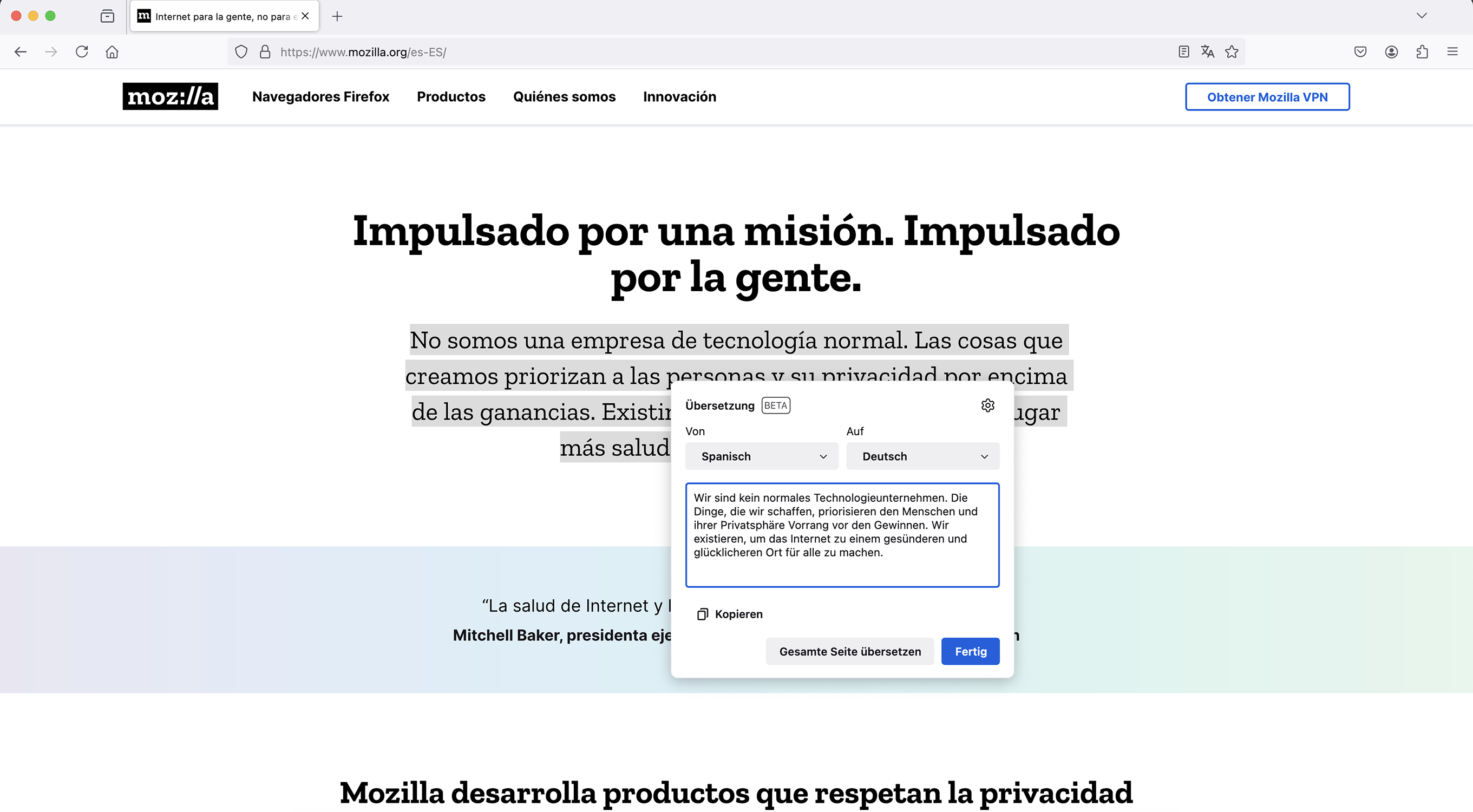
Für Nutzer, welche noch die frühere Erweiterung „Firefox Translations“ installiert hatten, wird diese mit dem Update auf Firefox 128 automatisch entfernt, nachdem hier nun Feature-Gleichheit herrscht.
Neuer Dialog zum Löschen der Browsing-Daten
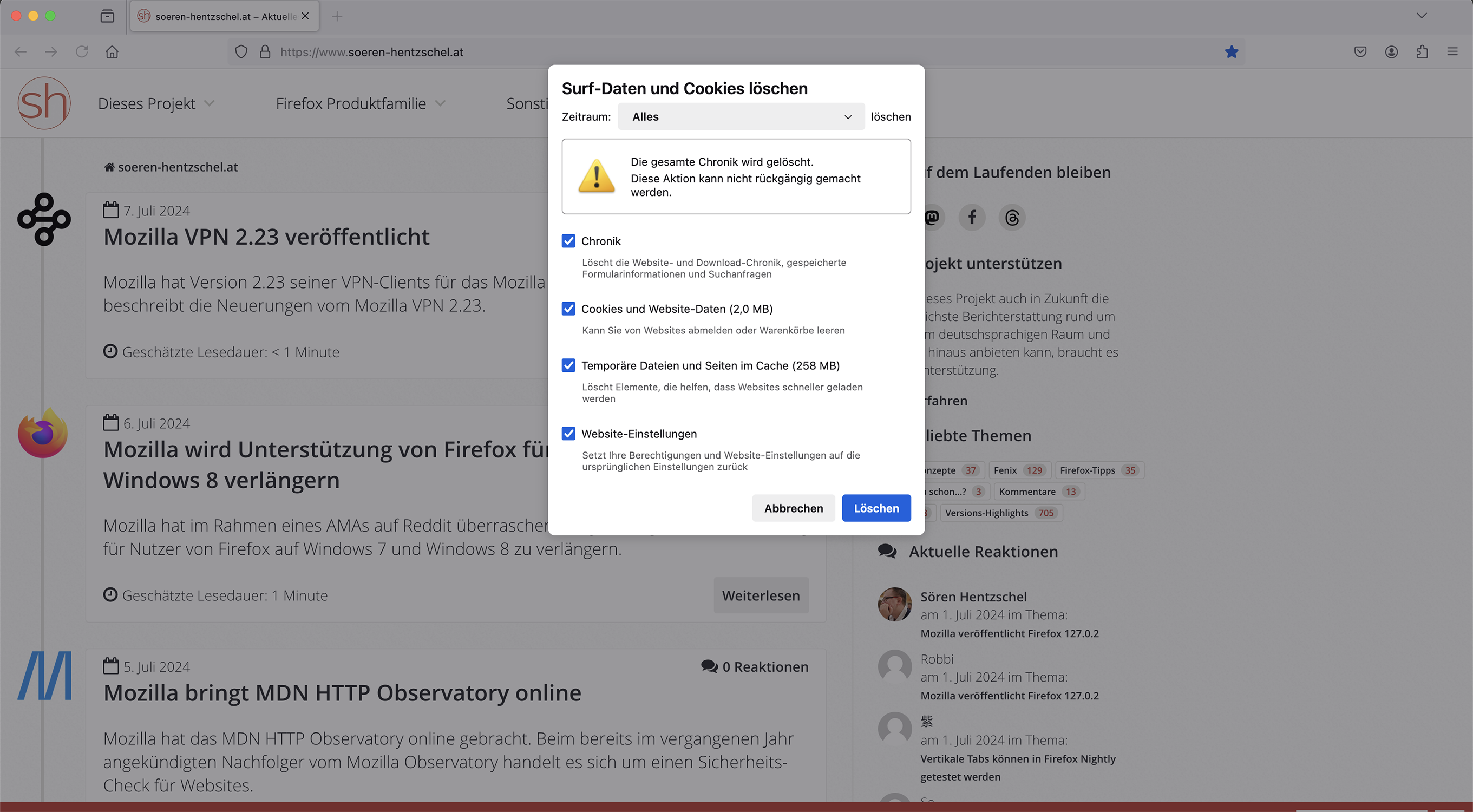
Der Dialog zum Löschen der Browsing-Daten wurde überarbeitet. Neben einer Reduzierung der Daten-Kategorien von sieben auf vier zeigt der neue Dialog Beschreibungstexte für jede Kategorie sowie den Platzbedarf von Cookies und Website-Daten sowie dem Browser-Cache an.
Netflix auch in privaten Fenstern
Die Wiedergabe von DRM-geschützten Inhalten auf Streaming-Plattformen wie Netflix funktioniert jetzt auch in privaten Fenstern.
USA, Kanada: Such-Trends in Adressleiste
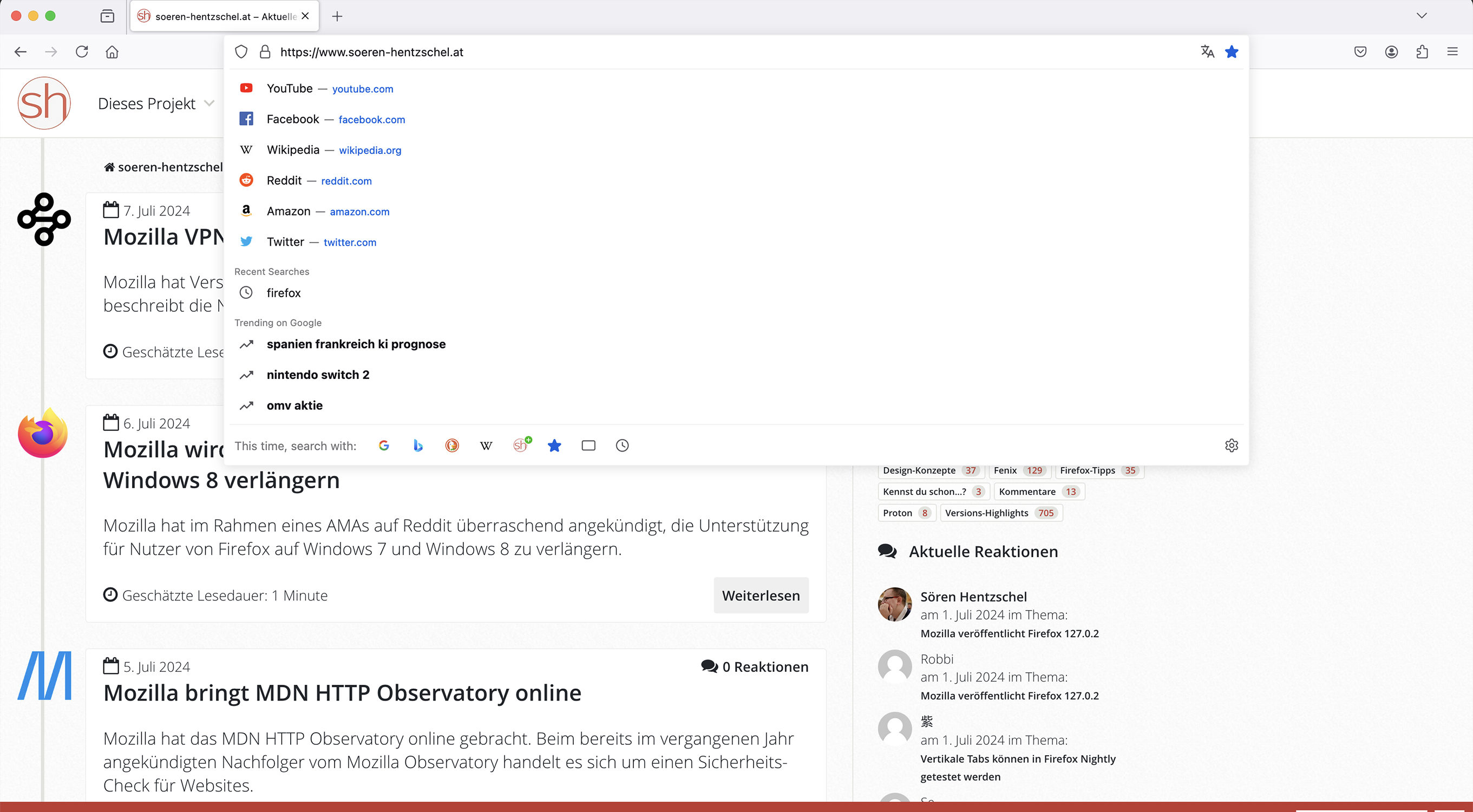
Nur für Nutzer mit US- oder kanadischem Englisch als Sprache zeigt Firefox beim Öffnen der Adressleiste jetzt direkt die letzte Suchanfrage sowie aktuelle Such-Trends an, um den Nutzer zur vorherigen Suchanfrage zurückzubringen oder zur nächsten Suchanfrage zu inspirieren.
Datenschutzfreundliche Werbe-Messungen für Websites
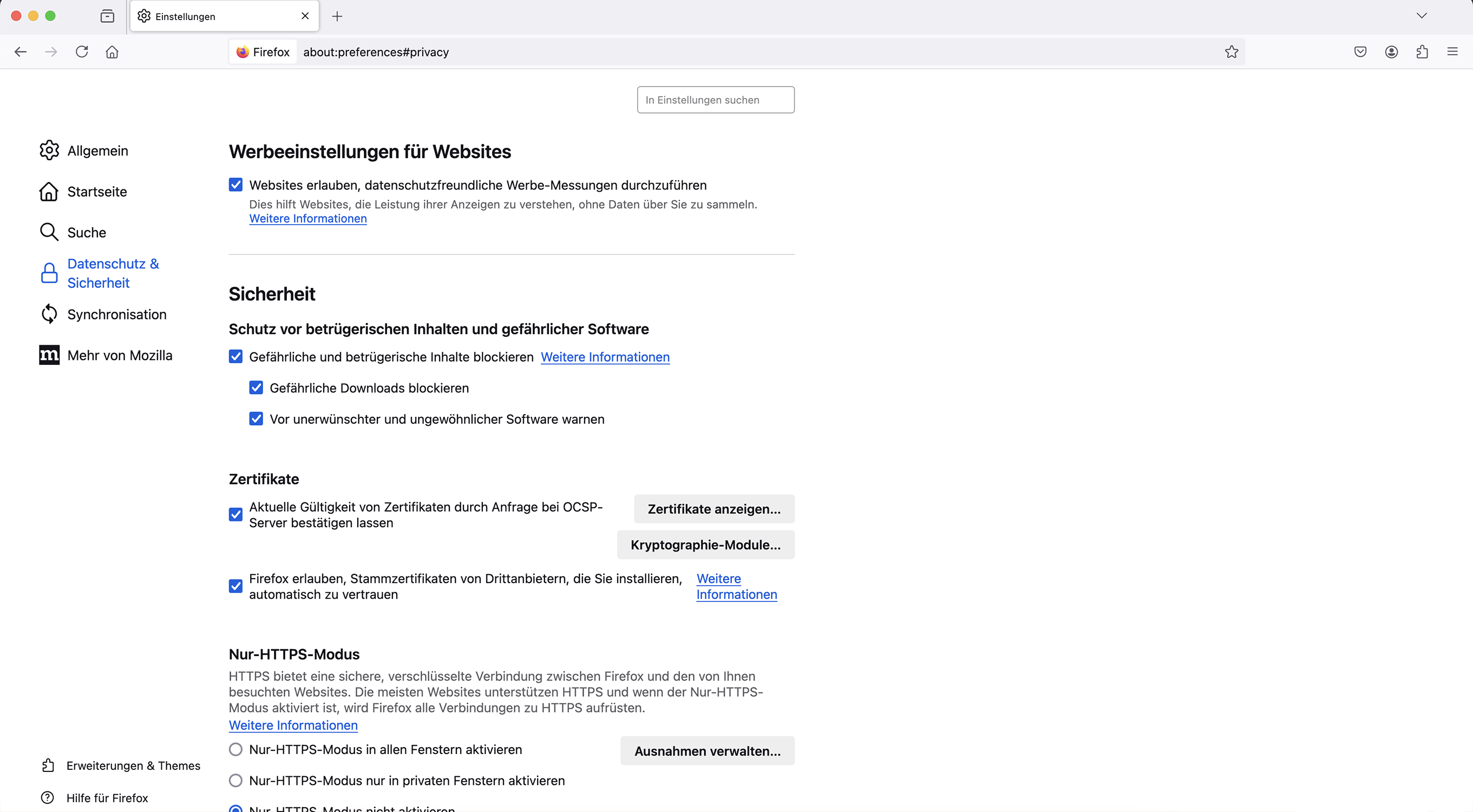
Firefox 128 bietet eine experimentelle Unterstützung der Privacy Preserving Attribution API, welche eine Alternative zum Nutzer-Tracking für die Zuordnung von Werbung bietet. Das Ziel ist es, einen neuen Webstandard zu entwickeln, der Websites verstehen helfen soll, wie deren Werbung funktioniert, ohne Daten über einzelne Personen zu sammeln. Indem Websites eine nicht-invasive Alternative zum Cross-Site-Tracking angeboten wird, soll diese schädliche Praxis im gesamten Web deutlich reduziert werden. Die Details und wie das die Privatsphäre gegenüber dem Status Quo verbessert, hat Mozilla ausführlich in einem Support-Artikel beschrieben.
Aktuell hat nur eine kleine Anzahl an Websites Zugriff auf diese Schnittstelle. Websites können via Origin Trial Zugriff auf diese Schnittstelle bei Mozilla beantragen. Bei einem Origin Trial handelt es sich um eine Möglichkeit für Websites, sich für experimentelle Funktionen der Webplattform zu entscheiden. Firefox-Nutzer können diese Schnittstelle über einen neuen Abschnitt „Werbeeinstellungen für Websites“ in den Firefox-Einstellungen deaktivieren.
Sonstige Endnutzer-Neuerungen von Firefox 128
Der Bild-im-Bild-Modus für Videos unterstützt jetzt auch Untertitel auf der Video-Plattform Vimeo.
Firefox 128 unterstützt die Darstellung weiterer Dateitypen mit einem text/* MIME-Type direkt im Browser, statt einen Download zu starten.
Das Stammzertifikat, das zur Überprüfung von Add-ons und signierten Inhalten verwendet wird, wurde erneuert, um ein baldiges Ablaufen zu vermeiden.
Bei Verwendung von SOCKS v5 wird der Proxy-Server jetzt auch für die DNS-Anfragen verwendet, um zu verhindern, dass DNS-Anfragen an das Netzwerk weitergeleitet werden.
Bei Verwendung eines dunklen Themes wird jetzt auch die Seite about:memory dunkel angezeigt.
Wird über about:config der Schalter browser.newtabpage.activity-stream.system.showWeather per Doppelklick auf true gestellt, kann seit Firefox 127 das aktuelle Wetter auf der Firefox-Startseite angezeigt werden. Wird zusätzlich der Schalter browser.newtabpage.activity-stream.weather.locationSearchEnabled auf true gesetzt, kann jetzt manuell der Ort für die Wetteranzeige verändert werden.
Mehr Sicherheit für Firefox-Nutzer
Auch in Firefox 128 wurden wieder mehrere Sicherheitslücken geschlossen. Alleine aus Gründen der Sicherheit ist ein Update auf Firefox 128 daher für alle Nutzer dringend empfohlen.
Um den Schreibzugriff der Inhaltsprozesse unter Windows weiter einzuschränken, wurde die Integritätsstufe der Sandbox reduziert.
Verbesserungen der Entwicklerwerkzeuge
Bei Herüberfahren mit der Maus über einen CSS-Selektor im Inspektor-Werkzeug zeigt Firefox jetzt die CSS-Spezifität des jeweiligen Selektors an, was beim verstehen helfen kann, wieso eine Regel Vorrang gegenüber einer anderen Regel erhält.
Wird in der Regeln-Ansicht des Inspektors die Eingabe einer Eigenschaft begonnen und dann die ESC-Taste gedrückt, entfernt Firefox nicht länger die neu eingegebene Zeile, sondern schließt nur die Autovervollständigung.
Benutzerdefinierte CSS-Eigenschaften werden jetzt außerdem als ungültig markiert und mit einem entsprechenden Hinweis als Tooltip versehen, wenn deren Wert nicht mit der registrierten Definition der benutzerdefinierten Eigenschaft übereinstimmt und zum Beispiel ein Farbwert gesetzt wird, während eine Länge erwartet wird.
Auch die Markierung von inaktivem CSS, also CSS-Regeln, die aufgrund falscher Verwendung nicht aktiv sind, und dazu passendem Hilfe-Tooltip wurde um weitere Fälle erweitert.
Die Performance des Inspektors wurde für Websites verbessert, auf denen es eine tiefe Verschachtelung von CSS gibt.
Verbesserungen der Webplattform
Firefox 128 unterstützt die Angabe relativer Farben in CSS. Damit kann ein Farbwert relativ zu einer Ausgangsfarbe erstellt werden. Dies ermöglicht die einfache Erstellung von Ergänzungen zu vorhandenen Farben – wie hellere, dunklere, gesättigte, halbtransparente oder invertierte Varianten – und damit eine effektivere Erstellung von Farbpaletten.
Die content-Eigenschaft unterstützt jetzt die Angabe eines Alternativtextes bei Verwendung eines Bildes. Dieser Text steht dann Barrierefreiheitswerkzeugen zur Verfügung.
Der Accept-Header für Bilder und Dokumente wurde geändert, um besser mit dem Fetch-Standard und anderen Browsern übereinzustimmen.
Unter Apple macOS wird bei der Mikrofonerfassung über getUserMedia jetzt die systemeigene Sprachverarbeitung verwendet, sofern möglich, was die Audioqualität verbessert.
Dies war nur eine kleine Auswahl der Verbesserungen der Webplattform. Eine vollständige Auflistung lassen sich in den MDN Web Docs nachlesen.
Verbesserungen für Erweiterungs-Entwickler
Auch für Entwickler von Firefox-Erweiterungen gab es eine ganze Palette an Verbesserungen. Dazu gehört unter anderem die Unterstützung von optional_host_permissions in Manifest v3-Erweiterungen.
Menü-Einträge von Manifest v3-Erweiterungen verschwinden nicht länger unter bestimmten Voraussetzungen von alleine.
Diverse weitere Neuerungen für Erweiterungs-Entwickler lassen sich im offziellen Mozilla-Blog sowie in den MDN Web Docs nachlesen.
Neue Basis für Firefox ESR
Firefox 128 löst Firefox 115 als Basis für Firefox ESR, die Unternehmensversion von Firefox mit Langzeitunterstützung, ab. Bestehende Nutzer von Firefox ESR 115 werden nach aktueller Planung am 1. Oktober 2024 mit dem Erscheinen von Firefox ESR 128.3 automatisch auf Firefox ESR 128 umgestellt werden. Die Unterschiede zwischen Firefox 128 und Firefox ESR 128 sowie Wissenswertes für System-Administratoren werden in einem gesonderten Artikel behandelt.
Der Beitrag Mozilla veröffentlicht Firefox 128 erschien zuerst auf soeren-hentzschel.at.



 Nach längerem Überlegen habe ich mich entschlossen, von Windows auf Linux umzusteigen. Dafür gibt es einige sehr gute Gründe. (

 Orange questioned the Belgian regulator
decision’s regarding the position of the NTP, which introduced Router
Freedom in the country. Source: BEREC
Orange questioned the Belgian regulator
decision’s regarding the position of the NTP, which introduced Router
Freedom in the country. Source: BEREC


