 Anmelden
Workshop Spieleprogrammierung mit Rust am Wochenende
Wer die Programmiersprache Rust zumindest ein wenig beherrscht und mithilfe von Bevy in die Spieleentwicklung einsteigen möchte, kann am Wochenende in Augsburg einen passenden Workshop besuchen.
Wer die Programmiersprache Rust zumindest ein wenig beherrscht und mithilfe von Bevy in die Spieleentwicklung einsteigen möchte, kann am Wochenende in Augsburg einen passenden Workshop besuchen.
Aufbauend auf dem Buch "The Technology Republic" von Palantir-CEO Alexander C.
A new FSFE report exposes how 56 interoperability requests under the Digital Markets Act have produced no concrete solutions by Apple, and how their declines contradict their own official documentation, leaving third-party developers locked out of iOS and iPadOS, despite European Commission’s latest specification decision.
 CC-BY-SA 4.0. by Rahak for FSFE.
The Free Software Foundation Europe (FSFE)’s report “The challenges of regulating interoperability. Analysing Apple’s request-based approach under the Digital Markets Act” sheds lights on how Apple has been implementing the interoperability obligations under the Digital Markets Act (DMA). Under the European Commission (EC)'s latest rules, third-party developers can formally request access to Apple's platform. This report looks at how Apple has handled those requests in practice. The evidence of the report is based on public data from Apple’s public tracker, implemented as a requirement of the regulatory framework.
Despite the EC's clear requirements under the Digital Markets Act, the FSFE's report finds that, as of 22 March 2026, not one of 56 formal interoperability requests has resulted in a solution. Developers requesting access to Just-in-Time compilation, NFC protocols, and Bluetooth Low Energy Audio, for example, have seen their requests denied often because the features in question “fall outside of the scope of the law”. Despite the company's own technical documentation, which points in the opposite direction. The report elaborates on the shortcomings of Apple's request-based approach in relation to effective interoperability: Apple’s model requires developers to navigate account creation, fees, detailed requests, internal review, and potentially long implementation timelines, fearing sudden and unreasoned closure of their developer accounts during the whole process.
The report argues that while the regulatory framework issued by the EC on interoperability represents a progress, requiring transparency and due process obligations from Apple, governance issues, as pointed out, will arise in the future. Therefore, the report calls for open standards, transparent procedures, and stronger regulatory enforcement so that Free Software developers can participate on fairer terms within the mobile ecosystem.
“Despite being legally required by the European Commission, Apple continues to obstruct effective interoperability. Out of 56 requests, not a single one has resulted in a new interoperability solution. Developers are denied access to Just-In-Time-Compilation, NFC, or Bluetooth Low Energy Audio with arguments contradicting Apple’s own documentation. And there is the constant fear for developers to lose their developer accounts. The DMA must be implemented in a developer-friendly way, ensuring that legal obligations translate into fair and equal access to iOS and iPadOS features.”Matthias Kirschner, FSFE President “Interoperability only works when it is built into the platform from the start. The European Commission’s regulatory framework to facilitate interoperability between Apple and competitors is a good step forward. Or report sheds lights on the challenges faced by software developers under this new framework.”Lucas Lasota, FSFE Legal Programme ManagerYou can read the full report here. What follows is a summary of the main findings.
I want to donate for Device Neutrality!
Apple is one of the largest tech companies in the world. Due to its market power, it is designated in Europe as a gatekeeper under the DMA, a law designed to regulate digital competition and open closed platforms. Under this legislation, Apple must provide free-of-charge interoperability for the features and functionalities controlled by its mobile operating systems, iOS and iPadOS. This should allow users to install and remove apps freely, use alternative app stores, and enable developers to connect their apps to key software and hardware features without being blocked.
Making Article 6(7) of the DMA Free-Software-developer friendly is crucial for Device Neutrality: it obliges gatekeepers to provide effective and free of charge interoperability with, and access to, the software and hardware features of designated operating systems such as iOS and iPadOS. In practical terms, this means that developers must be able to access the same operating-system-controlled features that the gatekeeper’s own services use, instead of being kept on the outside looking in.
The DMA represents an opportunity for Free Software developers to compete on equal terms with gatekeeper services. Free Software developers deserve the right to build genuine alternatives to closed ecosystems like iOS and iPadOS, while users gain access to alternative app stores, payment systems, and unfettered software installation in mobile devices as well.
When the DMA took effect, it expected gatekeepers like Apple to deliver interoperability by default: publishing APIs, clear documentation, and technical access matching that are equivalent to those used for their own services. Instead, Apple created a request-based system where each developer must seek permission for specific features, waiting for Apple to decide if they are ”in scope”. This led the European Commission to launch a specification case (DMA.100204), requiring a fairer process with timelines and a public tracker (for access to which an Apple account is required).
Rather than opening its platform by publishing APIs and documentation from the outset, Apple built a request-based system in which every developer must apply for access to each feature they need.
The process starts with an Apple developer account, which costs at least 99 USD (in Spring 2026), then developers need to fill a detailed request describing the feature, the use case, the technical need, and possible alternatives to the feature or functionality they are asking access for. Apple then performs an initial eligibility check within 20 working days, after which it may proceed, reject the request, or say that an existing solution already covers it.
If Apple rejects the request, developers can seek internal review and, in some cases, conciliation. Even when a request is accepted, Apple can still take up to 24 months to implement the result, depending on its own assessment of technical complexity. That means the process can stretch across months or years before developers see any practical benefit, even though the underlying right to interoperability is already supposed to exist.
 Timeline proposed by the European Commission to regulate Apple’s
interoperability requests. Source: European Commission.
Timeline proposed by the European Commission to regulate Apple’s
interoperability requests. Source: European Commission.
The EC’s intervention gave the process a regulatory framework. As of March 22, 2026, Apple has received 56 interoperability requests under Article 6(7) of the DMA since May 2025, of which 43 have been closed, but 27 of those closures are fully confidential. Of the 16 publicly disclosed closures, none resulted in Apple developing a new interoperability solution: 10 were denied on “technical grounds”, 2 were dismissed by Apple citing “existing solutions”, and 3 were rejected as “out of scope or invalid”.
 Interoperability requests received by Apple under Article 6(7) DMA until 22.03.2026
 Status of the interoperability requests received by Apple under
Article 6(7) DMA until 22.03.2026
Status of the interoperability requests received by Apple under
Article 6(7) DMA until 22.03.2026Several individual cases illustrate how the process works in practice. A Free Software terminal-like app requested access to Just-In-Time (JIT) compilation. JIT is already used by Apple’s Safari browser to run downloaded code securely in a sandbox. But Apple rejected the request from the developer and said JIT for non-browser apps was not a feature controlled by iOS.
Another developer sought access to FIDO tokens in wallet passes and the VAS NFC protocol used by Apple Wallet. Apple again denied that these were OS-controlled features, despite its own documentation requiring a special entitlement for NFC access.
A third case involved Bluetooth LE Audio for specialised research hardware. Apple said the feature was not available to or used by Apple’s own hardware or services, even though Bluetooth Low Energy is part of iOS and comparable functionality exists on competing platforms. Two further requests sought alternatives to Apple’s Push Notification Service, including decentralised or user-controlled notification servers. But both were rejected on the grounds that APNS is already open and persistent connections are simply an OS function.
These examples show the same pattern: Apple defines the scope narrowly enough to preserve its own product design choices, then treats those same choices as evidence that interoperability is unnecessary.
The burden of requesting and eventually getting access to interoperability rights falls almost entirely on developers. Under Apple’s model, they must prove case by case that a feature is “used by Apple” before they can gain access, while Apple remains free to reject the request based on its own interpretation of the scope. The EC’s framework imposes on Apple transparency obligations. For Free Software projects, this means technical work becomes entangled with legal argument, procedural deadlines, and repeated submissions.
The mandatory developer fee adds to the problem. Article 6(7) requires interoperability to be free of charge, yet Apple still requires a paid developer account to submit a request, which creates a financial hurdle at the very point where the law is supposed to lower barriers. For volunteers, small teams, and independent projects, that is not a minor inconvenience; it is a structural filter on who can participate from the beginning.
In the short term, effective and free interoperability access is essential to a developer-friendly enforcement of the DMA. Equal and fair access for all developers cannot depend solely on discretionary control of gatekeepers.
Looking further ahead, shared governance is essential. Regulators alone cannot ensure that interoperability serves the public interest; developers, users, and civil society must have a genuine voice in how it is designed, monitored, and enforced. The Free Software tradition, built on open standards and community oversight, demonstrates that interoperability can be democratically governed as a digital common, rather than shaped by bilateral deals between gatekeepers and their largest competitors. That is the standard the DMA should be held to.
The FSFE is still collecting first-hand accounts from developers who have engaged with Apple’s interoperability process under Article 6(7), or who were discouraged before they even began. Those experiences help document how the process works in practice and provide concrete evidence for regulators and enforcement actions.
If you are a developer who has requested access to software or hardware features under Article 6(7) of the DMA, or if you have considered doing so but were discouraged by the process, the FSFE wants to hear from you. Your experience can help document how interoperability works in practice and support better enforcement.
Share your experience:
Start the surveyMonitoring gatekeepers, analysing regulatory processes, and defending software freedom takes independent resources. Your support helps the FSFE continue this work, bring evidence to regulators, and push for interoperability by design.
Please consider making a donation to support the FSFE’s work for Free Software, Device Neutrality, and user choice.
 Anders als die Versionsnummer erwarten lässt, bringt der neue Major-Release nichts umwälzend Neues, aber vor allem eine nützliche Klärung. (Linux, Dateisystem)
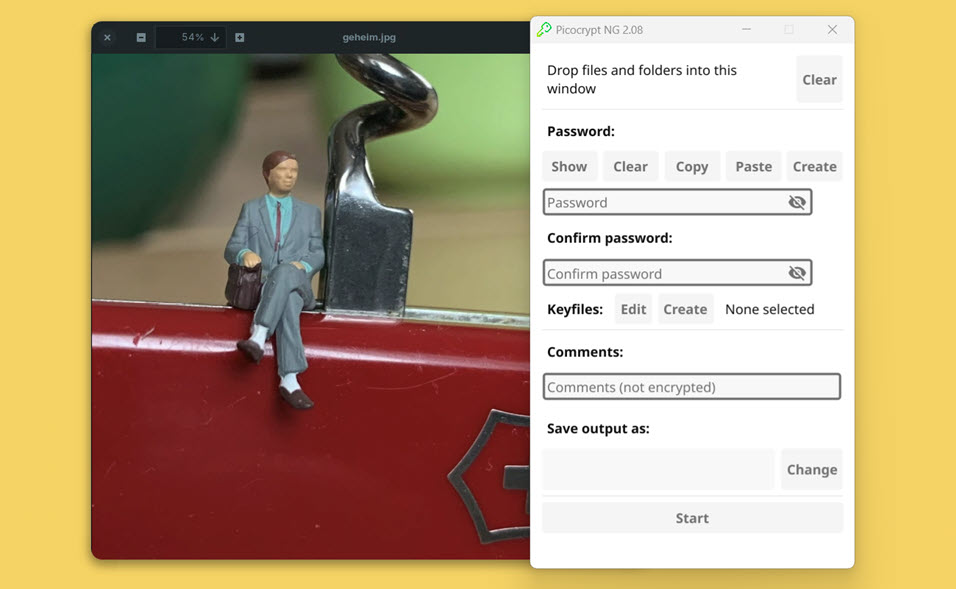
Das kleine Verschlüsselungstool Picocrypt war sehr beliebt, die Entwicklung wurde aber vor einigen Monaten eingestellt. Mit Picocrypt NG gibt es nun einen Fork, der aktiv gepflegt wird. Quantum-sichere Verschlüsselungstechnik zusammen mit pfiffigen Kleinigkeiten sind einen Blick wert.

Forgejo v15.0, die von der Community entwickelte, selbst gehostete Plattform für die Zusammenarbeit an Code ist erschienen.
Als einziges deutsches Unternehmen hat es Black Forest Labs aus Freiburg, Hersteller eines KI-Bildgenerators, auf die AI 50 List von Forbes geschafft.
 Mozilla wagt einen neuen Schritt und präsentiert mit Thunderbolt ein Werkzeug für Firmen, die ihre Daten nicht aus der Hand geben wollen. Hinter dem Projekt steht die MZLA Technologies Corporation, die bereits Thunderbird betreut. Thunderbolt setzt auf offene Technik und lässt sich komplett im eigenen Rechenzentrum betreiben. Damit richtet sich das System klar an Organisationen, […]
Der Beitrag Mozilla stellt Thunderbolt vor: Neuer Open‑Source KI Client für Unternehmen erschien zuerst auf fosstopia.
 Keycloak vereint Identity- & Access-Management in einer zentralen IAM-Schicht. SSO und MFA erfordern saubere Protokoll- und Systemintegration. Ein Online-Workshop zeigt die Umsetzung. (Golem Karrierewelt, Server-Applikationen)
 Debian hat eine neue Projektleiterin und ihr Name steht für gewisse Veränderungen. Sruthi Chandran tritt die Nachfolge von Andreas Tille an, der nach Ablauf seiner Amtszeit nicht erneut kandidierte. Die Wahl verlief unspektakulär, denn Chandran war die einzige Bewerberin und wurde nach den üblichen Abstimmungsformalitäten bestätigt. Chandran beschreibt sich als frühere Bibliothekarin und bringt viel […]
Der Beitrag Neue Führung für Debian: Sruthi Chandran übernimmt das Ruder erschien zuerst auf fosstopia.
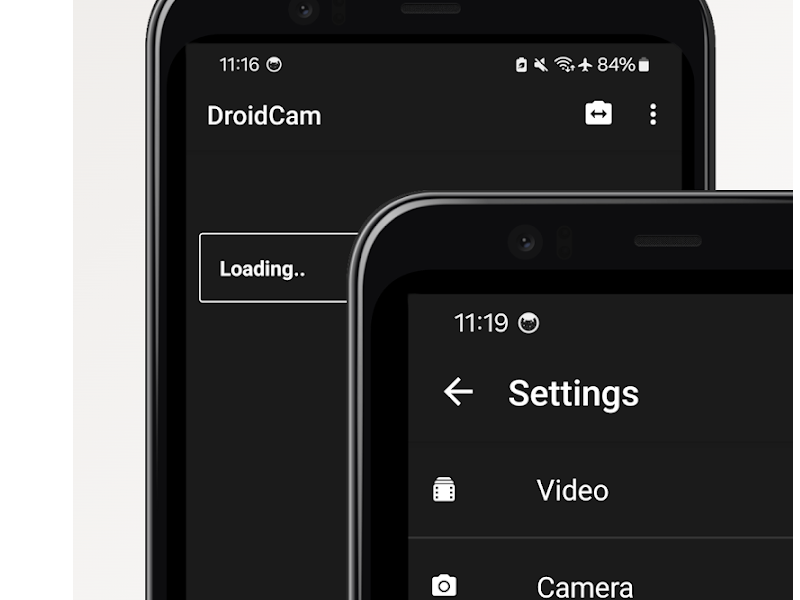
Möchtest du deine Handykamera als Webcam nutzen? In meinem neuen Video zeige ich dir, wie du DroidCam auf deinem Android-Gerät installierst und den Client auf deinem Linux-System einrichtest. Danach verbindest du dein Handy einfach über WLAN oder USB mit dem PC und die Webcam ist sofort einsatzbereit.


Die EU-Kommission will den Jugendschutz im Netz per App revolutionieren. Doch rasch entpuppt sich das Versprechen von Anonymität und Sicherheit als sehr fragil.
Fünf fabelhafte Fakten der Woche, die es irgendwie nicht zu einer Meldung auf Linux-Magazin Online geschafft haben – und warum eigentlich nicht.
Fünf fabelhafte Fakten der Woche, die es irgendwie nicht zu einer Meldung auf Linux-Magazin Online geschafft haben – und warum eigentlich nicht.
Der Autor fragt sich, ob man Git für synoptische Vergleiche von Gesetzen verwenden kann. Lassen sich Gesetze mit Software vergleichen?


Der unter Apache-Lizenz 2.0 veröffentlichte KI-Bildgenerator Nucleus Image von Nucleus AI belegt Spitzenplätze in einschlägigen Benchmarks und arbeitet dabei noch extrem ressourcensparend.
Mozilla treibt seine KI-Amibitionen weiter voran: Mit dem neuen KI-Client Thunderbolt sollen vor allem Unternehmen künstliche Intelligenz ins eigene Haus holen und einen eigenen, souveränen „AI…
Mozilla treibt seine KI-Amibitionen weiter voran: Mit dem neuen KI-Client Thunderbolt sollen vor allem Unternehmen künstliche Intelligenz ins eigene Haus holen und einen eigenen, souveränen „AI…

Valve hat die erste Beta-Version von Proton 11.0 veröffentlicht, die auf Wine 11 aufbaut. Dadurch sind die Windows-Versionen von Gothic 1, Breath of Fire 4 und Unknown Faces nun als „spielbar“ unter Linux gekennzeichnet.

KI-Technologien halten Einzug in deutsche Unternehmen, Kontrollmechanismen und Steuerungsinstrumente wachsen laut einer Umfrage aber nicht im gleichen Tempo.

Linux Mint 23 erscheint voraussichtlich erst im Dezember 2026. Damit stellt das Team auf einen längeren Entwicklungszyklus um und gewinnt mehr Zeit für die Weiterentwicklung der Desktop-Umgebung sowie Fehlerbehebungen.
Die Linux-Mint-Entwickler verlängern ziemlich planlos die Entwicklungsphasen ihrer Distribution.
Die Linux-Mint-Entwickler verlängern ziemlich planlos die Entwicklungsphasen ihrer Distribution.
 Mit der Integration in Haystack des deutschen Unternehmens Deepset will Mozilla eine Alternative zu großen KI-Enterprise-Produkten bieten. (KI, Datenschutz)
Einer Umfrage von Red Hat unter jeweils 100 IT-Entscheidungsträgern aus Deutschland, Frankreich, Großbritannien, Italien und den Niederlanden zufolge, besteht eine deutliche Lücke zwischen…
